




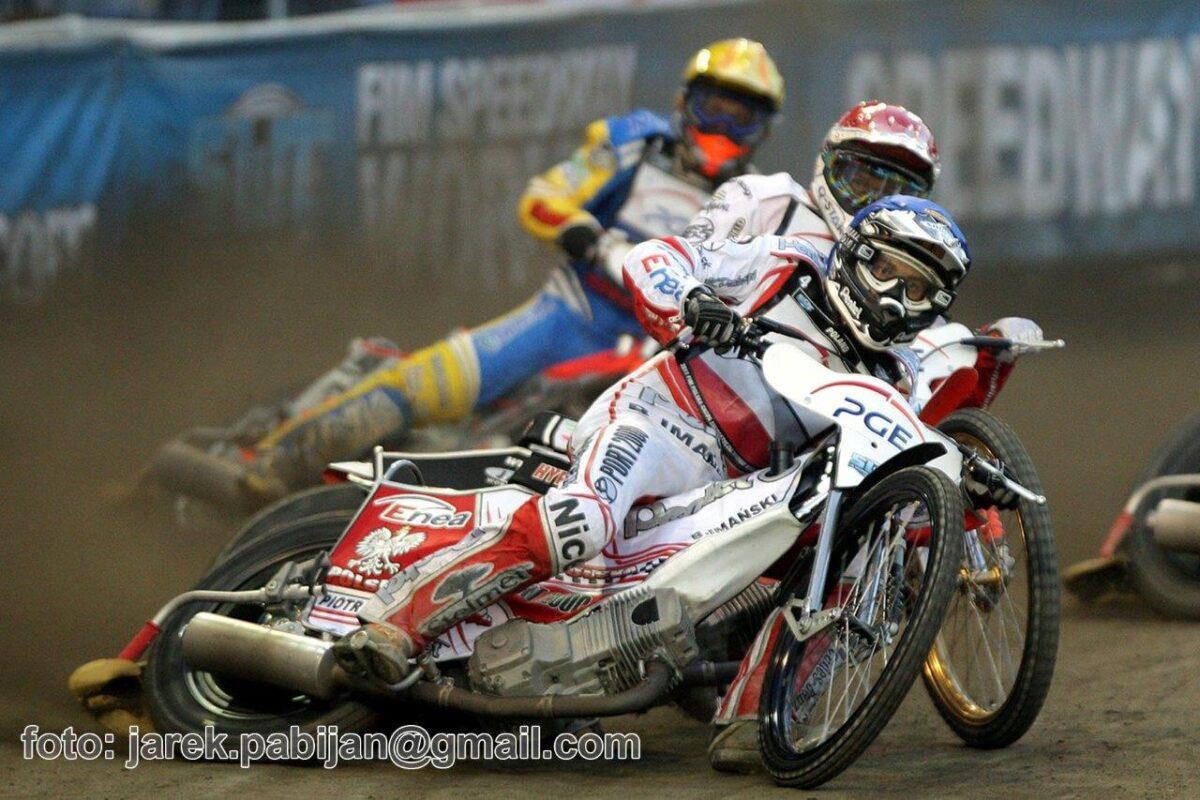
Piotr Protasiewicz, the current sports director of BETARD SPARTA Wrocław, is a multiple medalist in the Team World Championships. The Pole has won four gold and three silver medals in tournaments that have been renamed the Team World Cup since 2001. In an interview with ekstraliga.pl, he recalls his competitions with the Eagle on his chest.
Łukasz Rusiecki (ekstraliga.pl): Let’s go back to the beginning of your sports career with the Polish national team. How do you remember your first Team World Championships in 1996? You joined the team as a junior at 21 years old while also earning the title of Individual Junior World Champion.
Piotr Protasiewicz (seven-time World Championships medalist): That was a period of rebellion from some teams because the FIM competitions required the use of slick tires, which were challenging for racing, so several teams boycotted those competitions. Teams consisted of two riders and one reserve rider back then. As a reward for winning the Individual Junior World Championship, I was called up for this event. The lineup at that time was Tomasz Gollob, Sławomir Drabik, and myself. After the first unsuccessful race, where I finished last, I was replaced by Sławomir Drabik, who substituted for me until the end of the tournament. Tomasz and Sławomir both had great performances, and I remember there were a lot of emotions. I felt those emotions hadn’t fully left me after the Individual Junior World Championships final, because the events in Diedenbergen were a significant experience for me, and I felt not fully focused. Nonetheless, I won a medal and stood on the podium. This event was a major experience for me because I was still a junior, and I remember those competitions to this day.

A year later, a silver medal, where you raced alongside Tomasz Gollob, and there were many myths and rumors surrounding your duo. It seems that this rivalry drove both of you, but was it difficult to consolidate in a situation where you both carried the weight of the result?
I was a reserve rider then, and Jacek Krzyżaniak was in the main lineup, which I replaced after the first unsuccessful race and remained in the lineup until the end. Tomasz and I could have differences in private, but he could perform miracles when it came to pair racing, and if not for my mistake in the race against Sweden, where I hit a hole and, riding on a 5:1 advantage, I was pulled on the track, which Tony Rickardsson exploited, getting into the lead. Our double lead turned into a tie, and we lost the gold medal by probably one point. After those competitions, I had a lot of grievances with myself, and it bothered me for many days because we had the gold medal within reach, and I felt like someone who contributed more than the previous year. The situation unfolded as it did. Unfortunately, the field in Piła after rain was challenging to race on, and despite the silver medal, I felt unsatisfied because it was my sole mistake that cost us the victory.
In 2001, after a smoothly won repechage in Gdańsk, we claimed another silver, missing out on Australia by just three points. Back then, the Polish team essentially operated without a professional coaching staff. Who united all the riders and motivated them to cooperate at that time? Was it the mentioned Tomasz Gollob?
Speedway sport is moving towards professionalism, and there is a huge difference compared to how it looked twenty years ago. Ultimately, on the track, nobody needed motivating because the best Polish speedway riders were selected for the national team. We raced in front of our audience, and it was the first year of the Team World Cup in this format. There was a lot of marketing, and for the first time, we had a bigger, official sponsor for the team, making the whole venture quite a challenge. Everything was prepared very professionally, though obviously, it didn’t look like it does today, which relates to the times we are now in, but unfortunately, we couldn’t win back then. Tomasz Gollob led the team, but points were missing from myself and Jacek Krzyżaniak. We earned a silver medal, and that’s what we could achieve then because Australia, led by Jason Crump, was excellently disposed, although it was another medal for the collection.
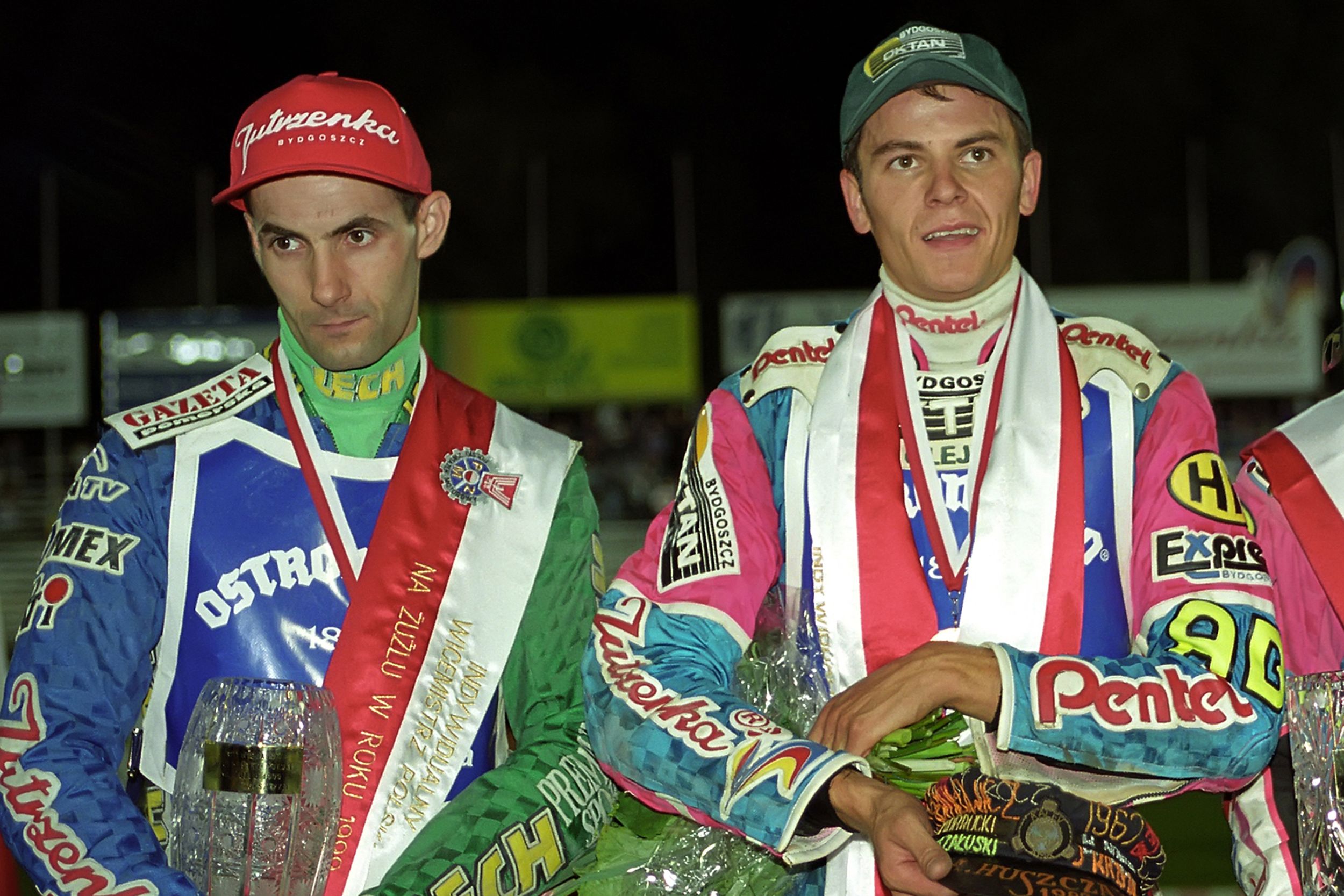
In 2002, you performed excellently in Eastbourne in the semi-final, but in the final in Peterborough, we performed poorly, to put it mildly. A year later, we placed fourth again in Holsted, Denmark. Were these difficult tracks our downfall? For example, Marek Cieślak mentioned that Tomasz Gollob bought special engines for the Team World Cup competitions in England, and we, as a team, weren’t well-prepared equipment-wise for such tracks.
Regarding the Peterborough events, I disagree, because we competed in the semi-final on the Eastbourne track, one of the toughest tracks in England, whereas the final took place on my home track in Peterborough, where I raced regularly. That track was typically Polish – long, wide, and fast. One could easily compete there on equipment we used in Poland, so I wouldn’t attribute the cause to equipment issues for those events. I don’t remember if Krzysztof Cegielski was also racing in England, but probably so. The semi-final in Eastbourne on a very challenging track went excellently, but the final on a much easier oval didn’t go as well, and we were simply weaker than the other teams. Another factor was the switch to racing with five riders. In 2003, there was another defeat on the Vojens track. The next year I didn’t compete, but fortunately, we redeemed ourselves in 2005 at the Wrocław track, where we secured gold, demolishing the rest of the field with a massive point lead. For us, that was the culmination of the previous seasons’ efforts in these events.

In the 2000s, you won gold in the Team World Championships three times: 2005 in Wrocław, 2009 in Leszno, and 2011 in Gorzów. In hindsight, the most challenging seemed to be the final in Leszno, where we won by one point against Australia, but you scored only 3 points in 4 races. Did you fear that if we didn’t win the championship, you would be blamed for this state of affairs?
That wasn’t my tournament, especially since we raced after rain and it was hard for me to adapt to the track. Tomasz Gollob also had a poor tournament, scoring 5 or 6 points, so only slightly more than me, but he won the last, crucial race on Krzysztof Kasprzak’s motorcycle. Other tournaments were very good for me. In Wrocław, it was very good, and in Gorzów, it was challenging because after the first unsuccessful race, I was replaced and didn’t race for ten races, but we changed the motorcycle, and it went: 3, 2, 3. It was difficult because in every race, we went against jokers from other teams. I withstood the pressure, and despite us losing while also using a joker for Tomasz Gollob, we deservedly won. Next, there was 2014, where we lost the gold at the finish of the last race. All in all, I have four golds and three silvers on my account, not a bad achievement. Each of those finals has left a lasting impression on my memory.
Are you satisfied with this achievement, or is there a slight sense of dissatisfaction?
I know it can be underestimated, but these are seven World Championship medals, and there aren’t many Polish athletes with greater achievements in these tournaments. I am very satisfied and proud to have been with the national team for so many years and the journey I went through with my colleagues.
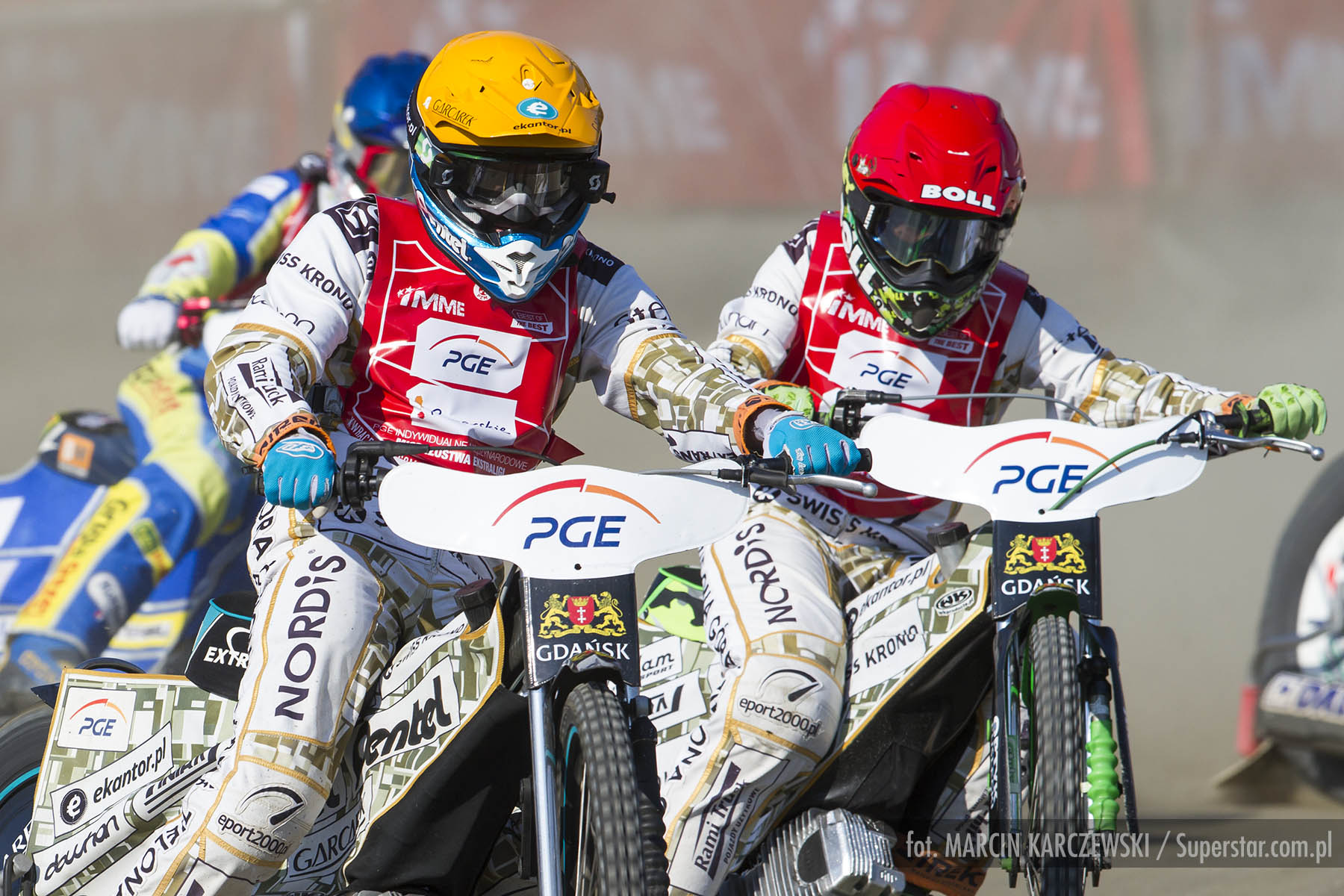
Did you feel more pressure in these competitions than when working in individual competitions solely for your own achievements?
I actually struggled more mentally in individual tournaments, such as the Speedway Grand Prix, where I wanted to perform even better at all costs, but in reality, it burnt me out. In team events, I had far more good performances than bad ones. I felt more comfortable and better at finding my way, though it wasn’t always perfect. In summary – there were many more good performances than bad, and I felt better in such competitions.
How do you assess the national team’s chances at the PGE National Stadium? The pressure should be immense, although it is believed that due to the unpredictable track, we won’t be favored to win?
Poland will always be a favorite in the Team World Cup. We have so many good Polish riders that we could form two good or even very good teams composed of our representatives. It’s up to the coach to choose the best riders at a given moment, and they don’t necessarily have to be the ones currently called up to the team because nobody knows the form in which Maciej Janowski or Kacper Woryna or other riders not in the team will be during the month of the Team World Cup final. I was also not in the team many times, and eventually, I was called up and went to the competitions. Certainly, the facility at the PGE National Stadium is peculiar because it’s much harder to overtake than on permanent tracks. The Australian team seems very strong today, and I believe they will be one of the main contenders for winning the gold, as they have riders who do exceptionally well on short tracks, as shown by their results in Warsaw. It won’t be easy, but the Team World Cup is a major celebration and show with a large number of fans. There’s always pressure, and no matter if we race in England, Poland, or elsewhere, our team is seen as favorites. I believe the guys will handle this task.

Stanisław Chomski has become the national coach. Do you share the majority of the community’s opinion, which supports this choice, and do you see yourself in such a role in future?
I am not worthy to present an accolade to Mr. Stanisław Chomski because I do not reach his level of achievements and experience, so it would be inappropriate to judge him, though I consider it a very good choice. Under Mr. Stanisław Chomski’s guidance, I won gold in the Team World Cup in 2005, and I respect him highly, and I rate his expertise extremely high because this man is basically a legend of this sport in terms of coaching in Poland. As for my coaching career, currently, I am in Wrocław, where my club is, and it’s my place. I don’t look too far into the future because I don’t know what will happen. The role of a team manager is very challenging, and it’s hard to plan anything for years. Today is one way, and tomorrow could be entirely different, but time will reveal what the future holds.
Łukasz Rusiecki